
Press release examples are real or model announcements that demonstrate how companies communicate news to journalists, media outlets, and the public in a structured, newsworthy format. Each example follows an inverted pyramid structure, leading with the most important information first so editors and AI systems can extract the story immediately. Studying real world examples is the fastest way to write press releases that attract media attention and generate coverage.
Looking for download-ready formats instead? Visit our press release samples hub for templates you can fill in directly.
Key Highlights:
The first paragraph of every effective press release answers who, what, when, where, and why before anything else.
Headlines under 100 characters with active verbs consistently outperform descriptive ones in media pickup rates.
Different announcement types require different structural emphasis: funding leads with the amount, crisis leads with the resolution.
Named sources with publication name and year increase AI citation rates by 40%, making every statistic in a press release more likely to be surfaced in AI-generated answers.
What Makes These Examples Worth Studying?
Most press releases fail before a journalist finishes the first paragraph. Not because the news is bad, but because the structure buries the story. Studying annotated press release examples fixes that problem faster than any news release template can, because you see exactly which decisions drive coverage and which ones kill it.
The 12 effective press releases on this page represent nine main types of company news announcements that public relations teams handle throughout the year. Each one is broken down with three lenses: what the release does right, what many PR teams get wrong in that category, and one specific technique you can apply to your next draft. These are not polished showpieces. They are working documents, and the annotations treat them that way.
According to a 2024 analysis by Muck Rack, 68% of journalists say the most important factor in whether they cover a story is whether the press release lead paragraph answers their immediate questions. That single data point explains why every great example here is evaluated from the first sentence outward, not from the press release headline down.
Before diving in, a note on differentiation: this page is analysis-focused.
If you need ready-to-use formats, our free templates page has download-ready press release templates organized by type.
If you need to understand structure from the ground up, our guide on how to write a press release covers every section, essential details, and key information in full.
Example #1: Product Launch (What Works + What Doesn't)
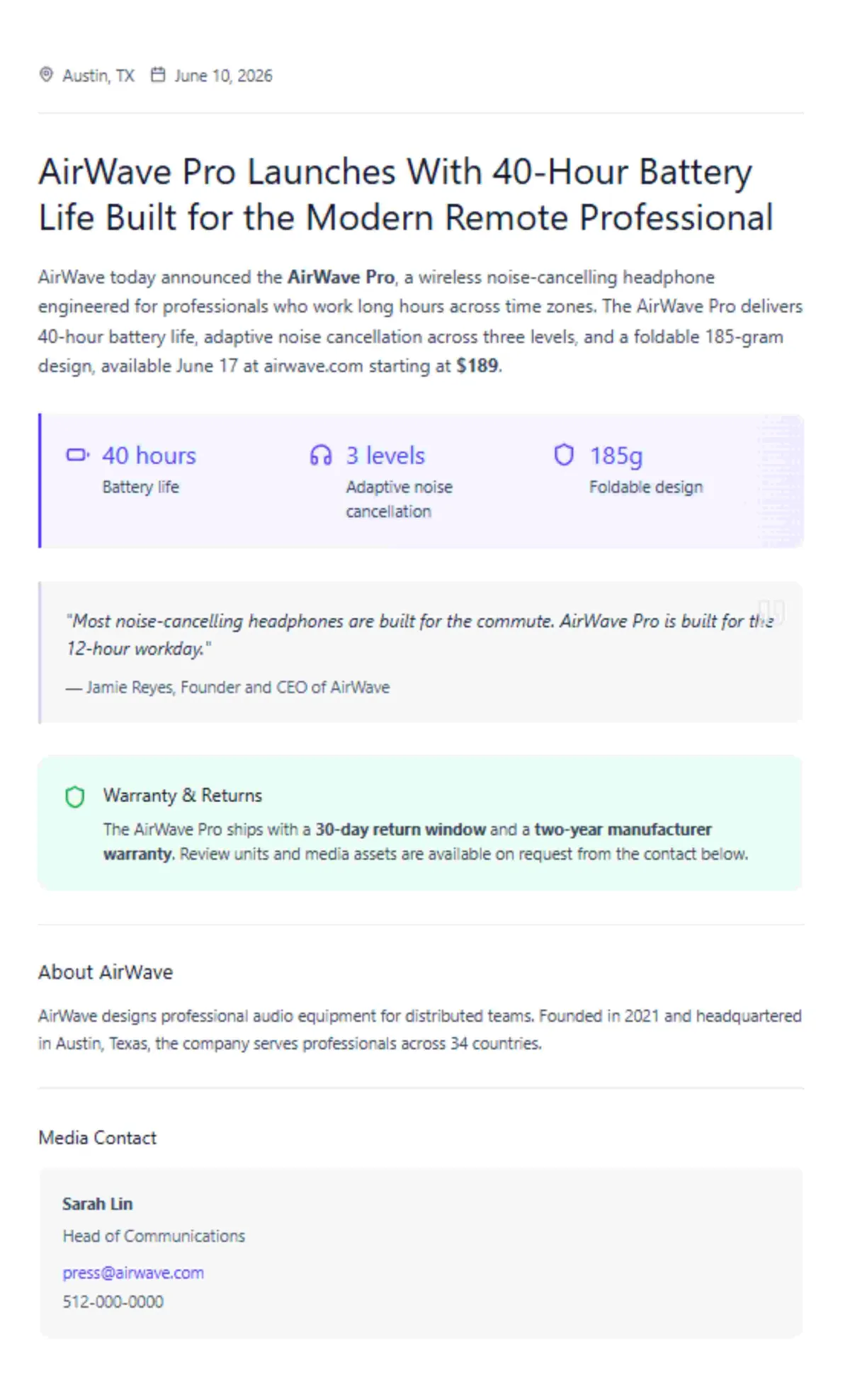
A product launch press release announces a new product to journalists and media outlets with enough detail to file a story without a follow-up call. This example covers a consumer tech launch and demonstrates how to lead with a differentiating spec rather than company background. It is the most common press release type and the one where structure mistakes are most costly.
What This Product Launch Headline Works?
The headline leads with the product name and the single most differentiating spec rather than "excited to announce." The opening paragraph answers who, what, when, where, and price in two sentences. The quote reframes the competitive angle rather than repeating what the body already said.
The Mistake Most Product Releases Make
The most common product press release mistake is opening with company backstory before the product news. Journalists and relevant stakeholders scan the first two sentences to find the key message. If the official announcement is not there, the release goes nowhere. Phrases like "a leader in innovative audio solutions" before the product name are the fastest way to lose a journalist's attention.
Technique to Steal From Product Release Example
Spec-first press release headline construction. Instead of "Company Announces New Product," write "[Company] Launches [Product]: [One Differentiating Fact]." The spec in the headline does the work that adjectives never can. This is one of the most effective techniques used in content marketing for product announcements.
Example #2: Funding Announcement
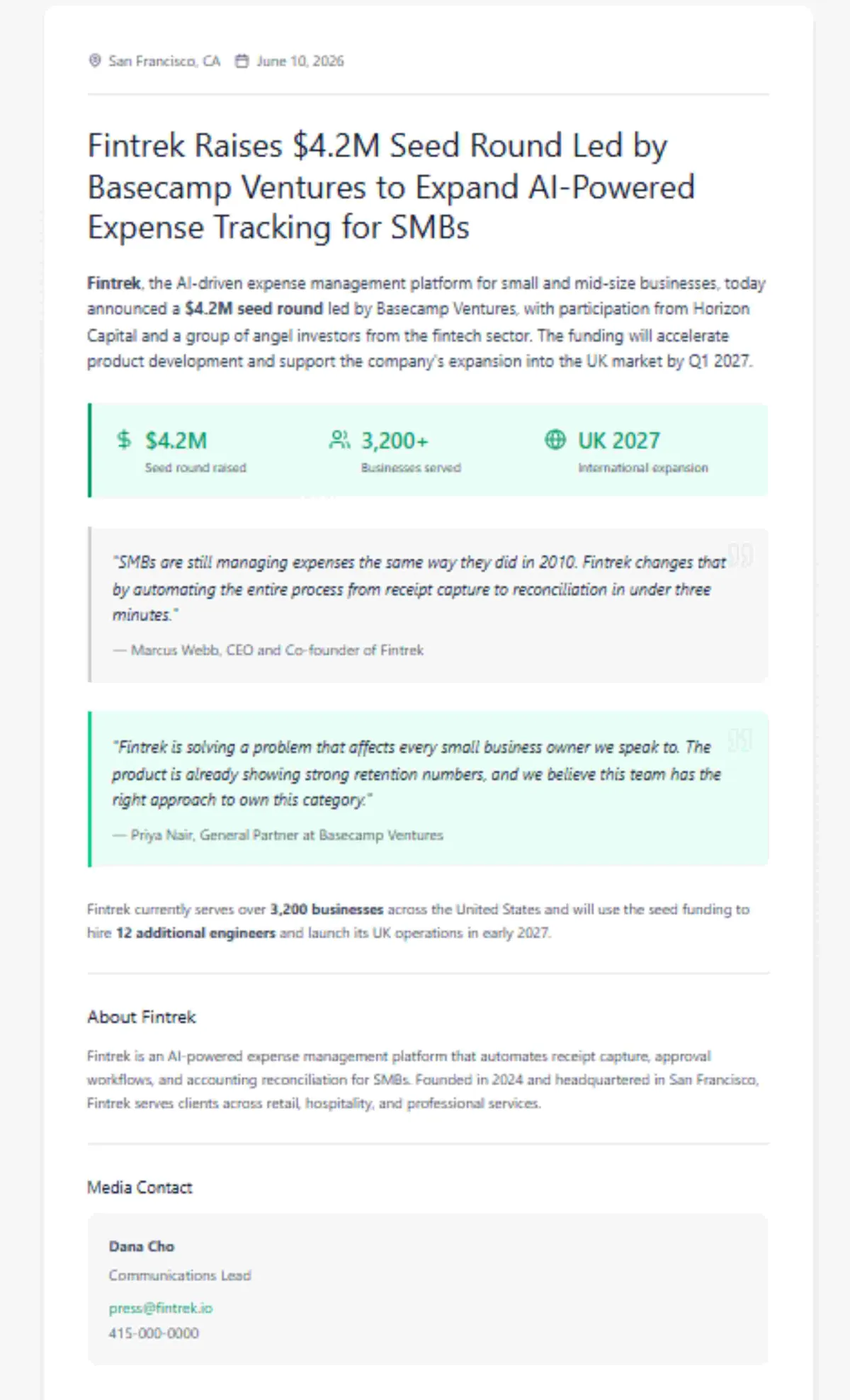
A funding announcement press release communicates a completed investment round to business journalists, industry media, and potential partners. This example shows how to lead with the round size, name the lead investor in the first sentence, and include a use-of-funds statement that gives journalists a forward-looking angle. Getting the sequencing right is the difference between a release that gets picked up and one that reads like an internal memo.
Why This Funding Release Leads With the Investor?
Strong funding announcement press releases lead with the total amount, the round type, and the lead investor in that order. Third party validation is the entire news hook here. A release that names a recognizable venture firm in the first sentence tells journalists the story has external credibility before they read another word. The investor quote functions the same way: it signals that an independent party with financial stakes believes in the company's strategic direction.
Effective funding releases also include a use-of-funds sentence in the second paragraph. "Proceeds will be used to expand the engineering team and enter the European market by Q1 2027" is citable and gives relevant stakeholders a concrete forward-looking angle. "To accelerate growth" is not. This is the key information that separates a press release written for coverage from one written for internal celebration.
The Mistake Most Funding Releases Make
Burying the round size past the first sentence. The dollar amount is the news. Everything else is context.
The Technique to Steal
Format that works:
[Startup] Raises $4.2M Seed Round Led by [Investor] to Expand AI-Powered Expense Tracking
City, Date — [Startup], the AI-driven expense management platform for SMBs, today announced a $4.2M seed round led by [Investor], with participation from [Co-Investor]. The funding will accelerate product development and support expansion into the UK market by Q1 2027.
Two sentences. Complete story. Journalist has everything needed to file.
Example #3: Executive Appointment
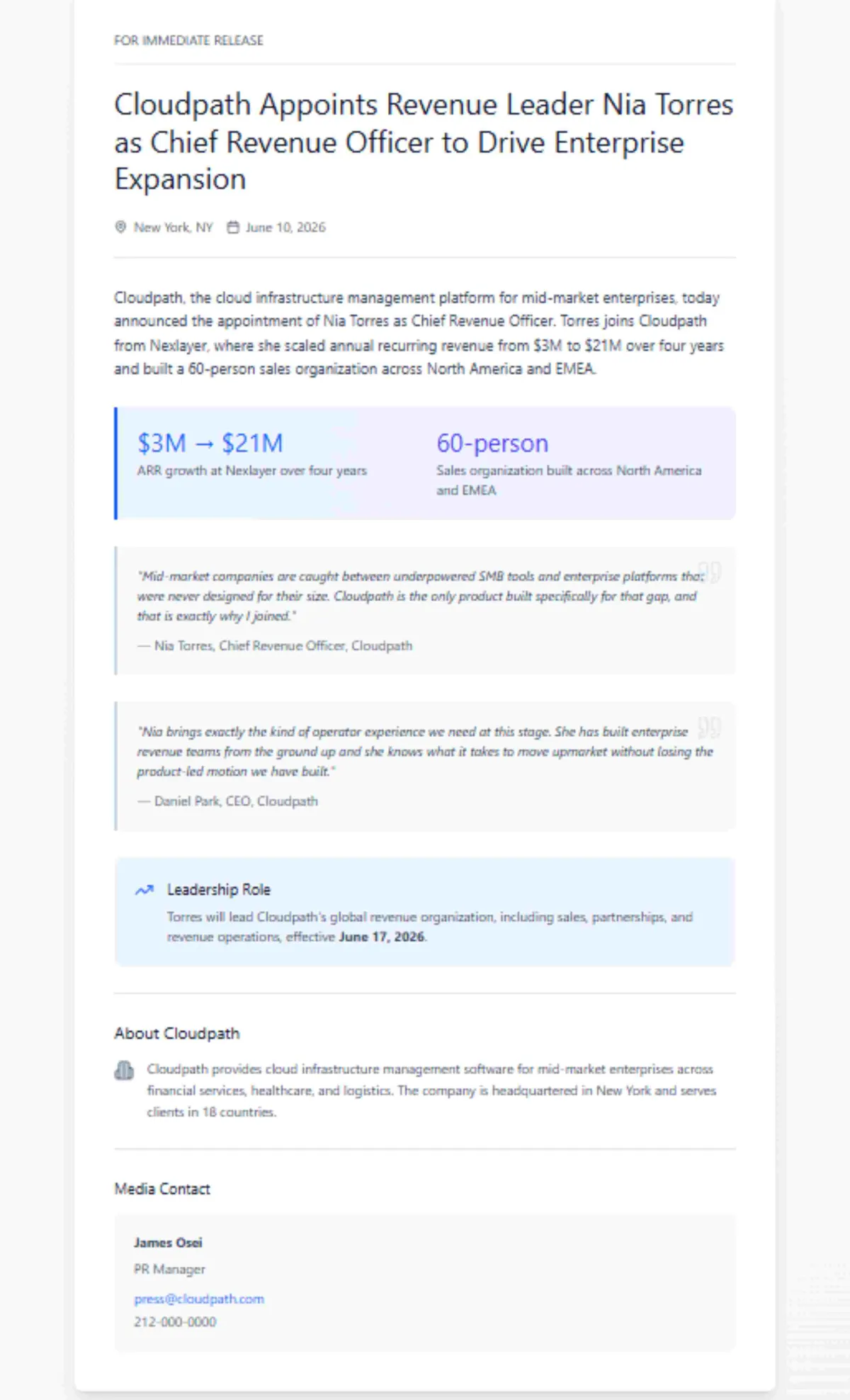
An executive appointment press release covers new hire announcements and executive hires, communicating leadership changes to the press, industry peers, and potential customers who track them as signals of company direction. This example demonstrates how a strong hire press release leads with the hire's most relevant achievement rather than their title. The quote is the most important element in this release type, and this example shows exactly what it should accomplish.
Why the Quote Is the Entire Story Here
Executive appointment press releases live or die by the quote. The incoming executive's quote should signal strategic direction, not enthusiasm. A quote that says "I'm thrilled to join this incredible team" tells readers nothing. A quote that says "The SMB market is underserved by enterprise-grade revenue tools, and that gap is exactly what [Company] is positioned to close" gives journalists a market relevance angle worth covering.
The body should include the executive's most recent role and one specific, quantifiable achievement. "Previously scaled ARR from $2M to $18M at [Prior Company] over three years" is citable. A list of job titles is not.
The Mistake Most Appointment Releases Make
Listing every role the executive has held since college. Two prior roles, one quantified achievement, one forward-looking quote that communicates strategic direction. That is the complete formula. Many press releases for executive appointments bury the company highlights and key details under a list of titles that no journalist will read.
What to Steal
Write the executive's quote before you write anything else in the release. If the quote is not interesting enough to open a LinkedIn post, the release does not have a story yet.
Example #4: Partnership Announcement
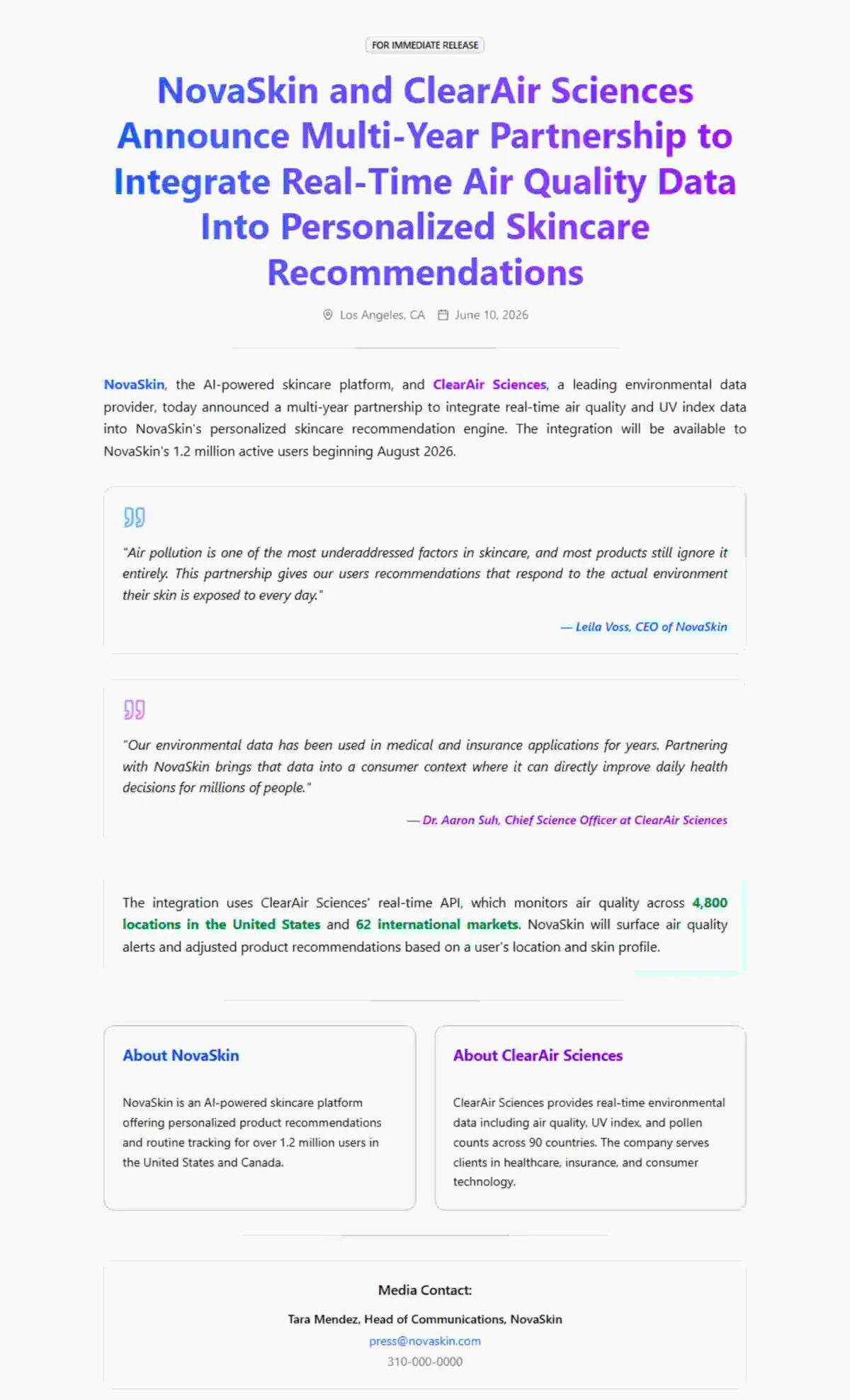
A partnership press release announces a formal business arrangement between two companies and explains why the combination is strategically significant right now. This example covers a multi-year technology integration partnership and shows how to give both parties a voice without making the release feel like a corporate formality. The market rationale is what separates a partnership release that earns coverage from one that earns a polite pass.
Why This Partnership Release Earns Coverage
Partnership press releases require two quotes, one from each party, each articulating what the other brings to the arrangement. The release must also state the scope or duration of the partnership wherever possible. Vague language like "to explore opportunities together" signals to journalists that there is no concrete deal to cover.
A real-world benchmark: L'Oreal's partnership announcement with BreezoMeter worked because it named the specific integration ("real-time air quality data into L'Oreal's skincare recommendation engine"), stated the multi-year term, and explained why the combination was strategically significant. That level of detail gave relevant journalists a story with a market relevance angle, not just a contract signing.
The Mistake Most Partnership Releases Make
Announcing a partnership without explaining why it matters now. The market shift that made this partnership necessary is often the most interesting part of the story.
What to Steal
Many press releases skip this entirely and communicate effectively only to people who already understand the market context, which is never the journalist.
Example #5: Event / Conference
An event press release announces an upcoming conference, summit, or industry gathering to journalists who cover the relevant beat and to potential attendees deciding whether to register. This example covers a multi-day professional conference and shows how to serve both audiences in a single release without losing focus. The registration path and the most compelling speaker should both appear before the third sentence.
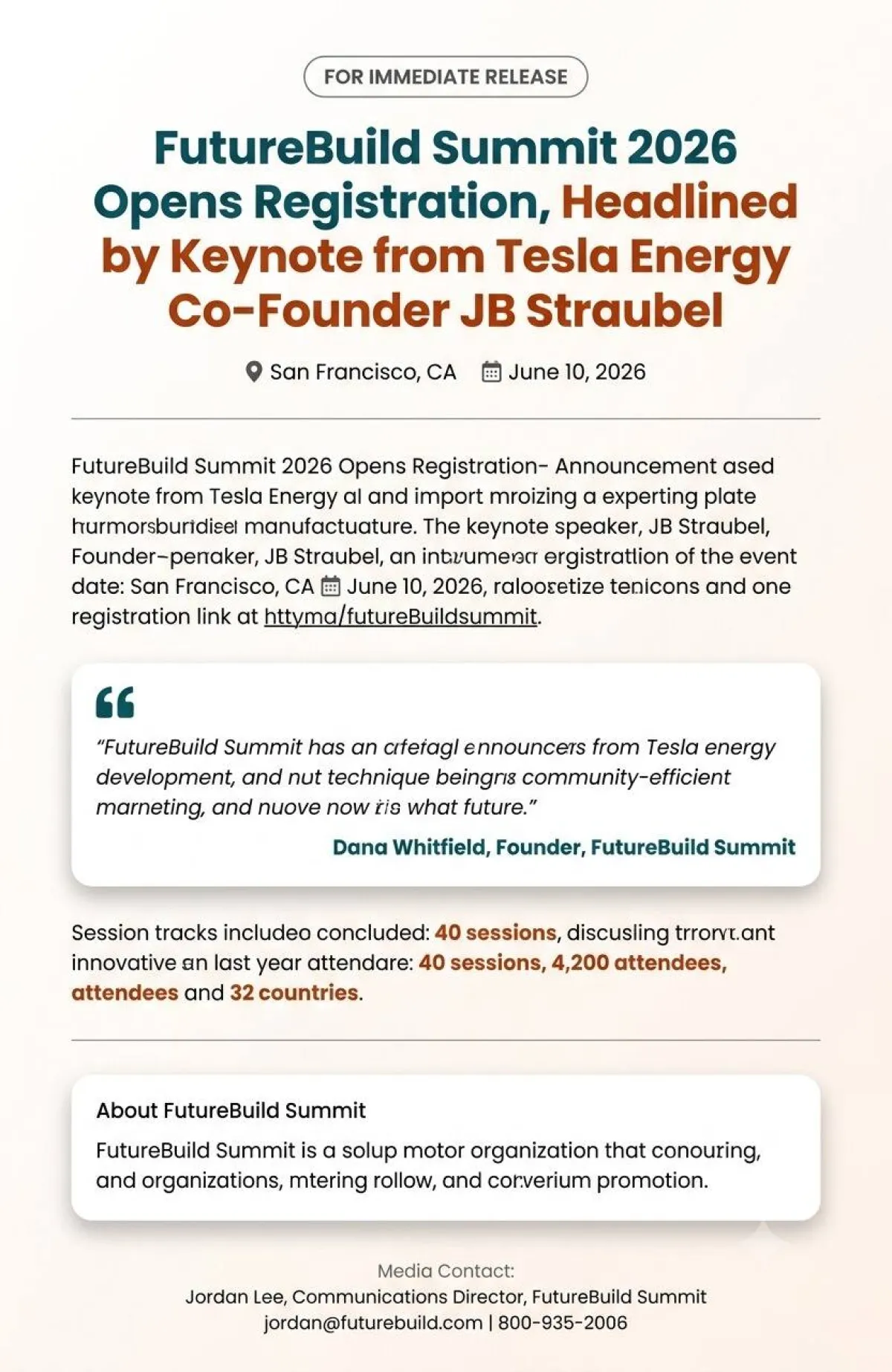
Why This Event Release Serves Two Audiences at Once
Event press releases serve two audiences at once: journalists who might cover the upcoming events and potential attendees deciding whether to register. The headline should name the event and the most compelling speaker or anchor session. The opening paragraphs must answer the event's theme, date, location, and registration path, giving both audiences the key details they need in the first two sentences.
The Mistake Most Event Releases Make
Describing last year's event in the opening paragraph. The upcoming event is the news. Past attendance figures belong in the second paragraph at earliest, and only if they establish credibility ("following 2025's sold-out conference of 4,200 attendees").
What to Steal
Place the registration link in the body of the release, not only in the boilerplate. Journalists forwarding this to editors want the audience to be able to act immediately.
Example #6: Award / Recognition
An award press release announces external recognition from an independent body and uses that recognition to establish brand recognition and credibility with journalists who would otherwise have no reason to cover the company. This example shows how specificity about the awarding process, the number of applicants, and the selection criteria converts a self-congratulatory announcement into a verifiable news story. The awarding body's credibility, not the company's, is always the lead.
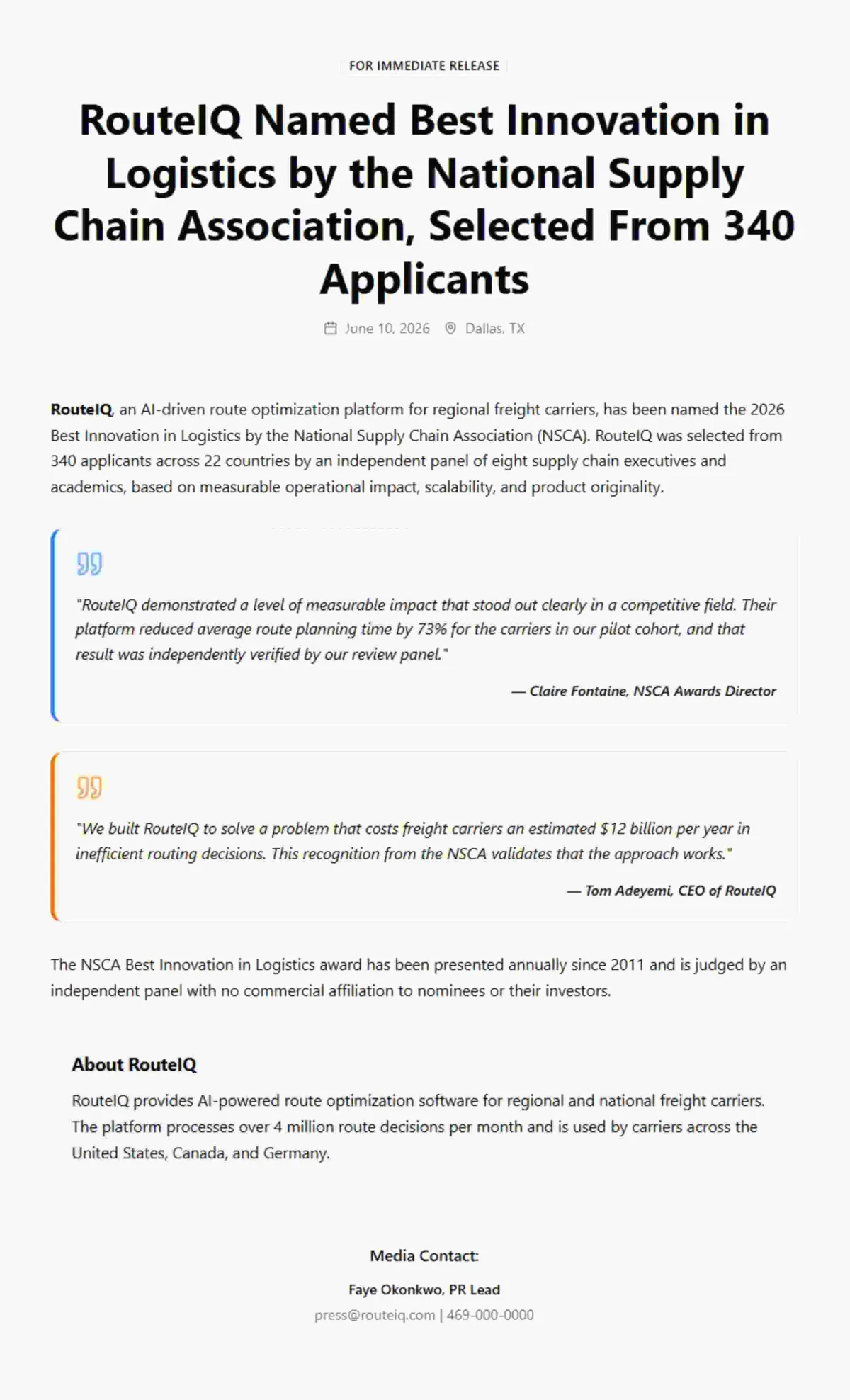
Why This Award Release Leads With the Awarding Body
Award press releases have a structural credibility problem: they are inherently self-congratulatory, and most journalists treat them accordingly. The releases that get covered are the ones that contextualize the award with specificity. Who awarded it? How many companies were considered? What criteria were used by the selection panel?
"[Company] was selected from 340 applicants by the National Logistics Association's independent review panel for its AI-driven route optimization platform" is a story. "[Company] won the Best Innovation Award" is a press release that will not get opened.
The Mistake Most Award Releases Make
Starting the release with your company's name. Start with the awarding body's credibility. Third party validation is the lead.
What to Steal
Name the number of companies considered and the selection criteria in the first paragraph. Specificity converts a self-serving announcement into an independently verifiable fact that journalists can accurately report without additional research. This is the company milestone detail that makes an award release genuinely newsworthy rather than promotional.
Example #7: Nonprofit Campaign
A nonprofit campaign press release announces a charitable initiative and gives journalists the specific details they need to cover it as a story rather than as brand promotion. This example shows how naming the mechanism of giving, the dollar amount, and the recipient organization in the first paragraph makes the release immediately credible. The nonprofit partner's quote is not optional; it is the third party validation that makes the story publishable.
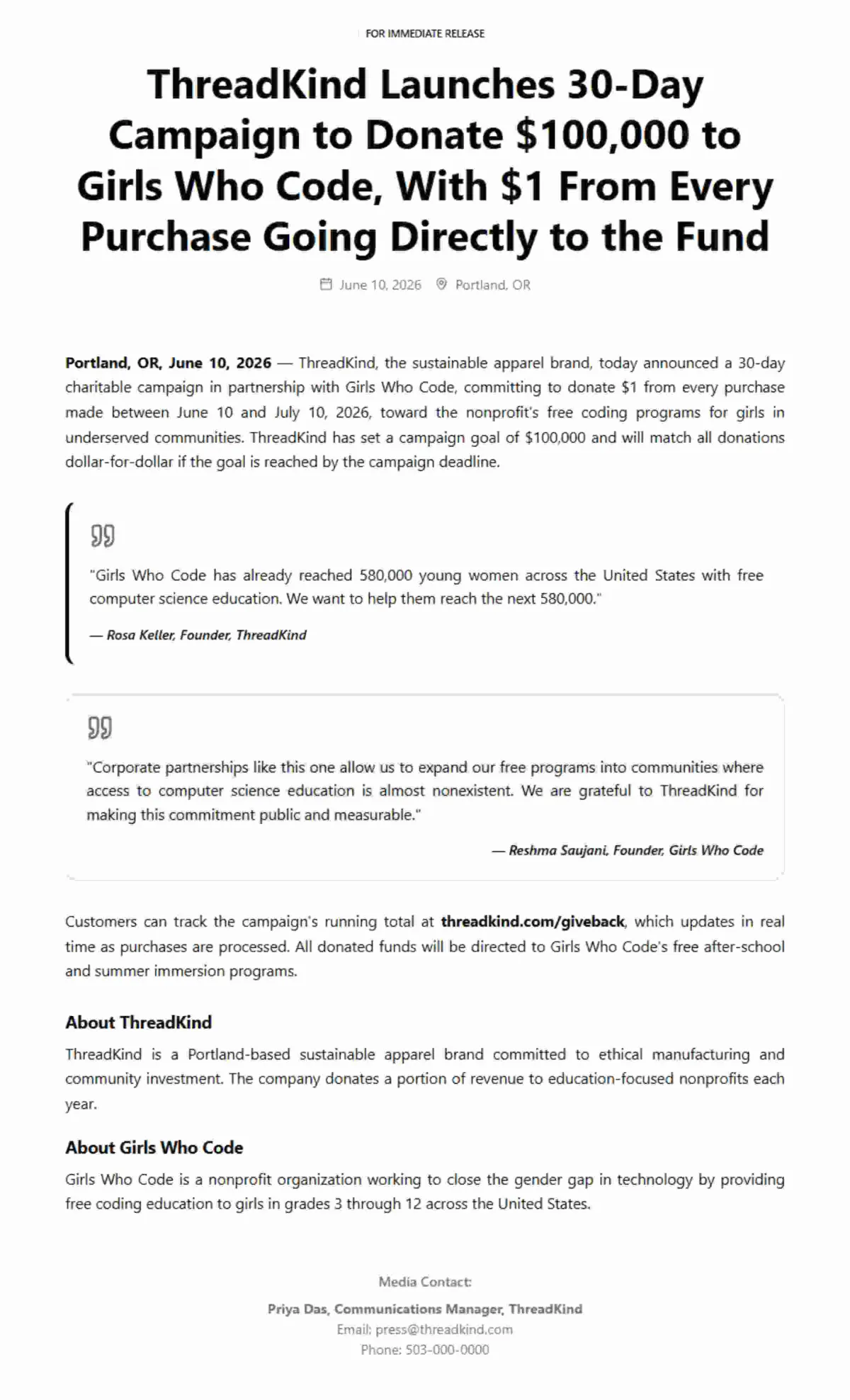
Why This Charity Release Has Three Credibility Signals
Charity press release examples perform best when they include three specific elements: the mechanism of giving (how money is raised or donated), the named recipient organization, and a quote from the nonprofit partner rather than only from the donating company.
A strong real-world reference is Shapermint's announcement of a $100,000 campaign benefiting The American Nurses Foundation. The release worked because the dollar amount was specific, the recipient was named, and the mechanism was explained clearly: one dollar from every purchase through a set date would be donated. Readers and journalists knew exactly what was happening and when it ended.
The Mistake Most Nonprofit Releases Make
Vague commitments without timeframes or amounts. "We are committed to giving back to our communities" is not a press release. It is a sentence looking for one.
The Technique to Steal
Always get a quote from the nonprofit partner. That quote is the third party validation that elevates the release from brand promotion to credible news. It also improves brand visibility by associating the company's work with a recognized nonprofit, giving journalists and search engines a credible third party source to reference alongside your brand.
Example #8: Rebranding / Company Update
A rebranding press release announces a name or identity change and explains the strategic reason behind it so the news reads as business development rather than cosmetic marketing. This example covers a B2B SaaS company transitioning from a narrow product name to a platform identity and shows how to answer the reader's first question, which is always "why," before anything else. The old name, new name, effective date, and live URL all belong in the first paragraph.
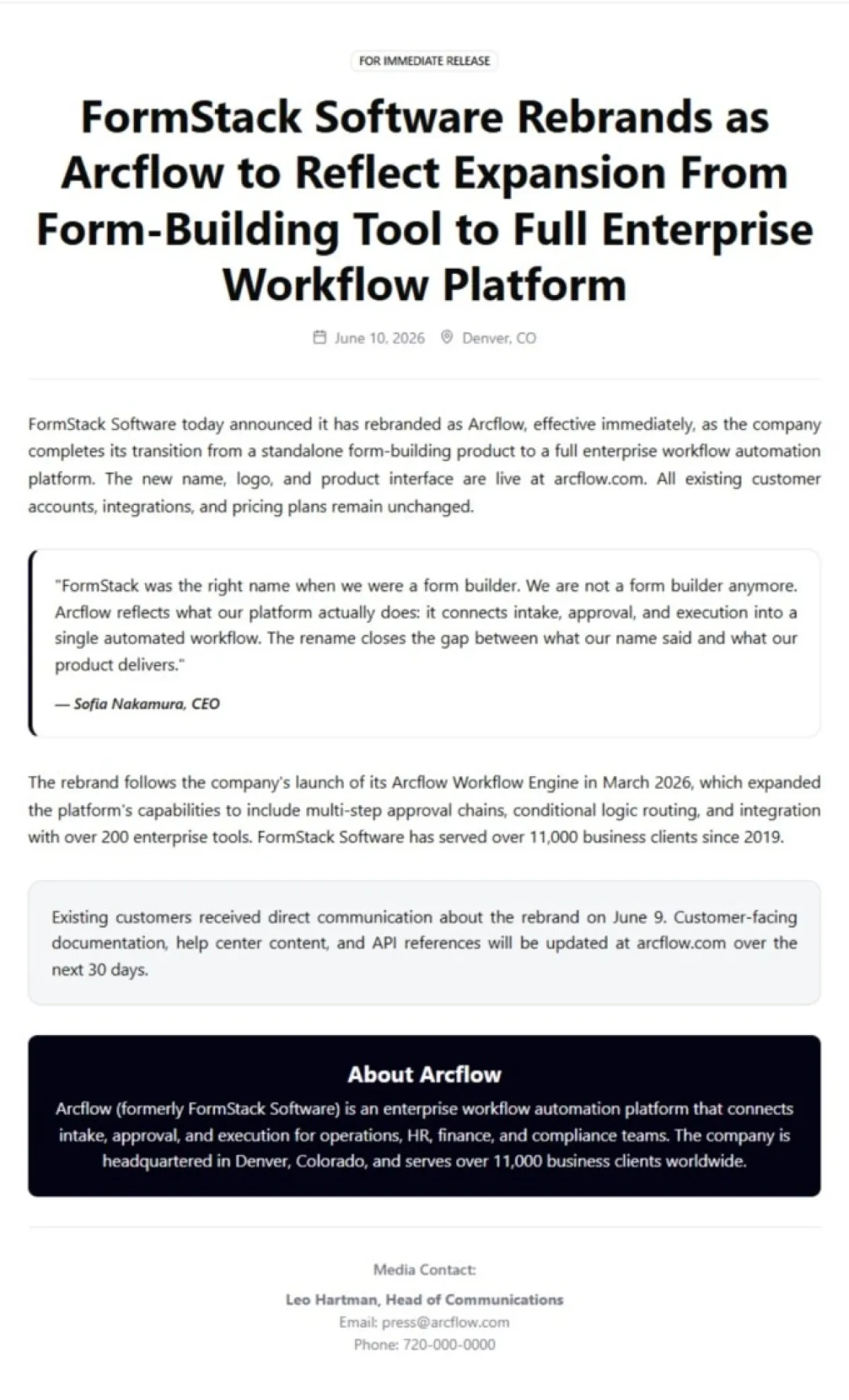
Why This Rebrand Release Answers "Why" Before Anything Else
Rebranding press releases need to answer the most immediate reader question: why? A name or identity change without a strategic rationale reads as cosmetic. The strongest rebranding releases frame the change as the external signal of an underlying business transformation, whether that is a new market, a new product category, or a new target audience.
The release should include the old name, the new name, the effective date, and a URL where the rebrand is live. The CEO quote should articulate the company's strategic direction going forward, not describe the logo.
The Mistake Most Rebranding Releases Make
Spending more than one sentence on design choices. Visual identity details belong in a brand press kit, not in the release body. The key narratives in a rebranding release are always strategic direction and market expansion, not color palettes or logo rationale. Additional context about design can live in a separate media asset.
What to Steal
Open the CEO quote with the market rationale for the change, not a statement about the brand. "This rebrand reflects our expansion from single-market SMB software into a full enterprise platform" is quotable. "We are excited to reveal our new look" is not.
Example #9: Real Estate Deal
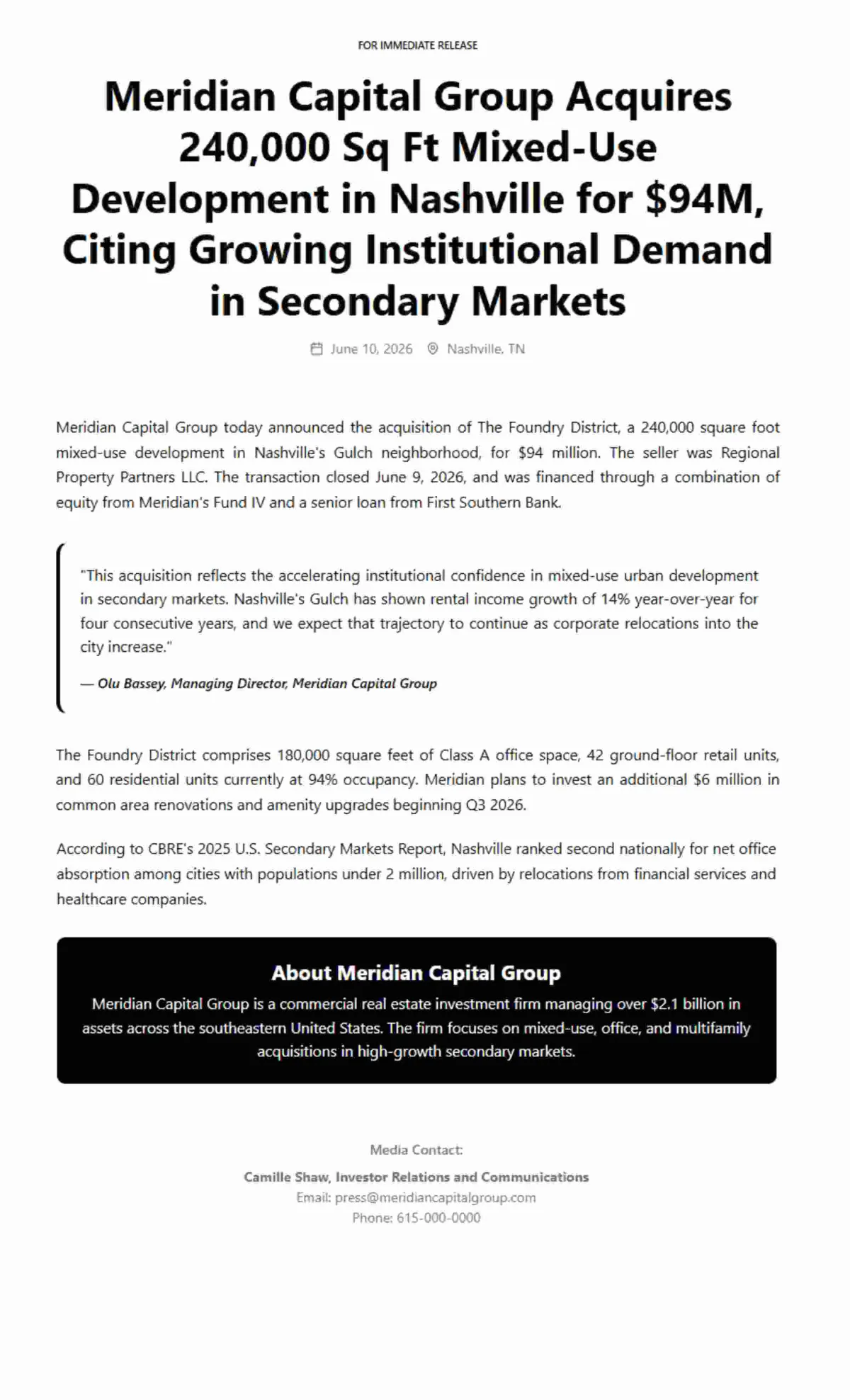
A real estate press release announces a property transaction and gives business and commercial real estate journalists the deal specifics they need to report the story accurately. This example covers a large commercial acquisition and demonstrates how to anchor the deal in a broader market trend so the release has a story angle beyond the transaction itself. The property details, the price, and both parties belong in the first sentence.
Why This Real Estate Release Leads With Market Context
Real estate press releases are transaction-driven, and the transaction details are always the lead. The release should open with the property address or market, the transaction size, and both parties in the first sentence.
Quotes in real estate releases perform best when they speak to broader market trends rather than just the deal. "This acquisition reflects growing institutional interest in mixed-use urban development in secondary markets" gives journalists covering commercial real estate a macro angle to build a story around.
The Mistake Most Real Estate Releases Make
Generic language about "strategic acquisitions" without naming the property, the price, or the strategic rationale. Acquisition press release drafts that omit the contact details, transaction price, and both party names force journalists to follow up before they can file, which most will not do.
What to Steal
Anchor every real estate release in a market trend. The deal is proof of a larger story. Lead with the trend, use the deal as the evidence. Including key findings from a named industry report, as this example does with CBRE, gives business wire services and journalists the supporting data they need to frame the story without additional reporting.
Example #10: SaaS Feature Launch
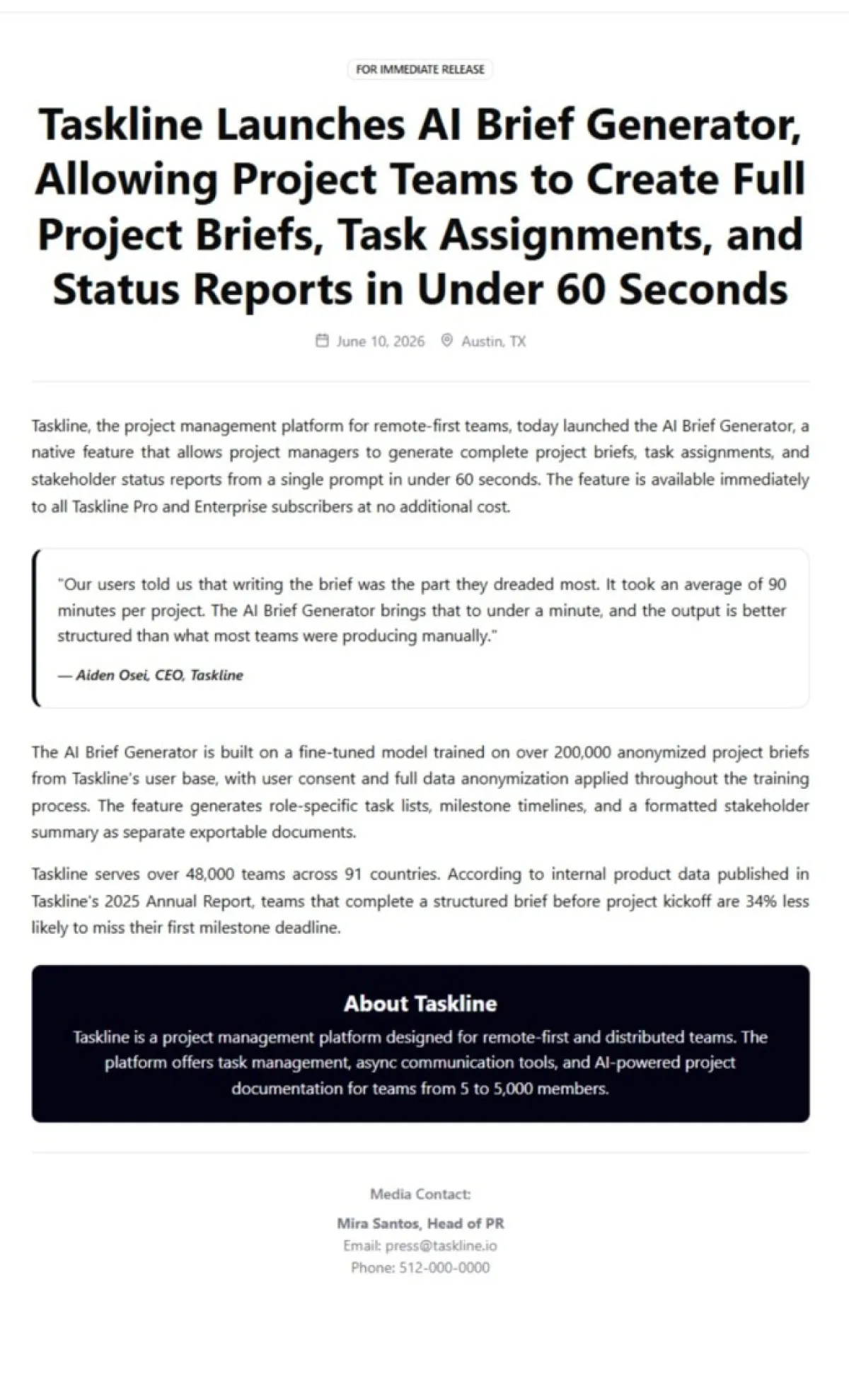
A SaaS feature launch press release announces a new product capability and translates it from a technical update into a user benefit that journalists and customers can understand without product knowledge. This example covers a project management platform launching an AI-powered feature and shows how to lead with the workflow change the feature creates rather than the engineering that produced it. Benefit first, mechanism second is the rule that applies to every SaaS release regardless of the feature type.
Why This SaaS Release Leads With the User Benefit
SaaS product update press releases must lead with user benefit, not technical detail. "We integrated GPT-4o into our platform" is a technical detail. "Teams using [Product] can now generate project briefs, task assignments, and status updates in under 60 seconds" is a benefit that a journalist or potential customer can understand and quote.
This distinction is the most common structural mistake in SaaS press releases. Engineers describe what was built. The effective press release translates that into a workflow change.
The Mistake Most SaaS Feature Releases Make
Jargon-heavy headlines that require product knowledge to understand. If a journalist covering enterprise software cannot understand the press release headline without reading the body, it needs a rewrite. The same applies to the opening paragraphs: search engines index the first 100 words heavily, so clarity in the opening is both a reader experience issue and an SEO issue.
What to Steal
Write the first sentence from the user's side of the screen. Then add the technical detail in sentence two for credibility. Benefit first, mechanism second.
For companies distributing SaaS news at scale, press release distribution through tech-focused wire services increases the likelihood of pickup by industry newsletters and B2B software journalists significantly.
Put This Into PracticeThe 10 examples above demonstrate the structural decisions that separate releases that get covered from those that do not. Apply the same annotations to your own drafts before you send them. When you are ready to distribute, EasyPRwire places your release in front of the journalists and outlets most relevant to your announcement type.
Example #11: Retail / Ecommerce Sale or Launch
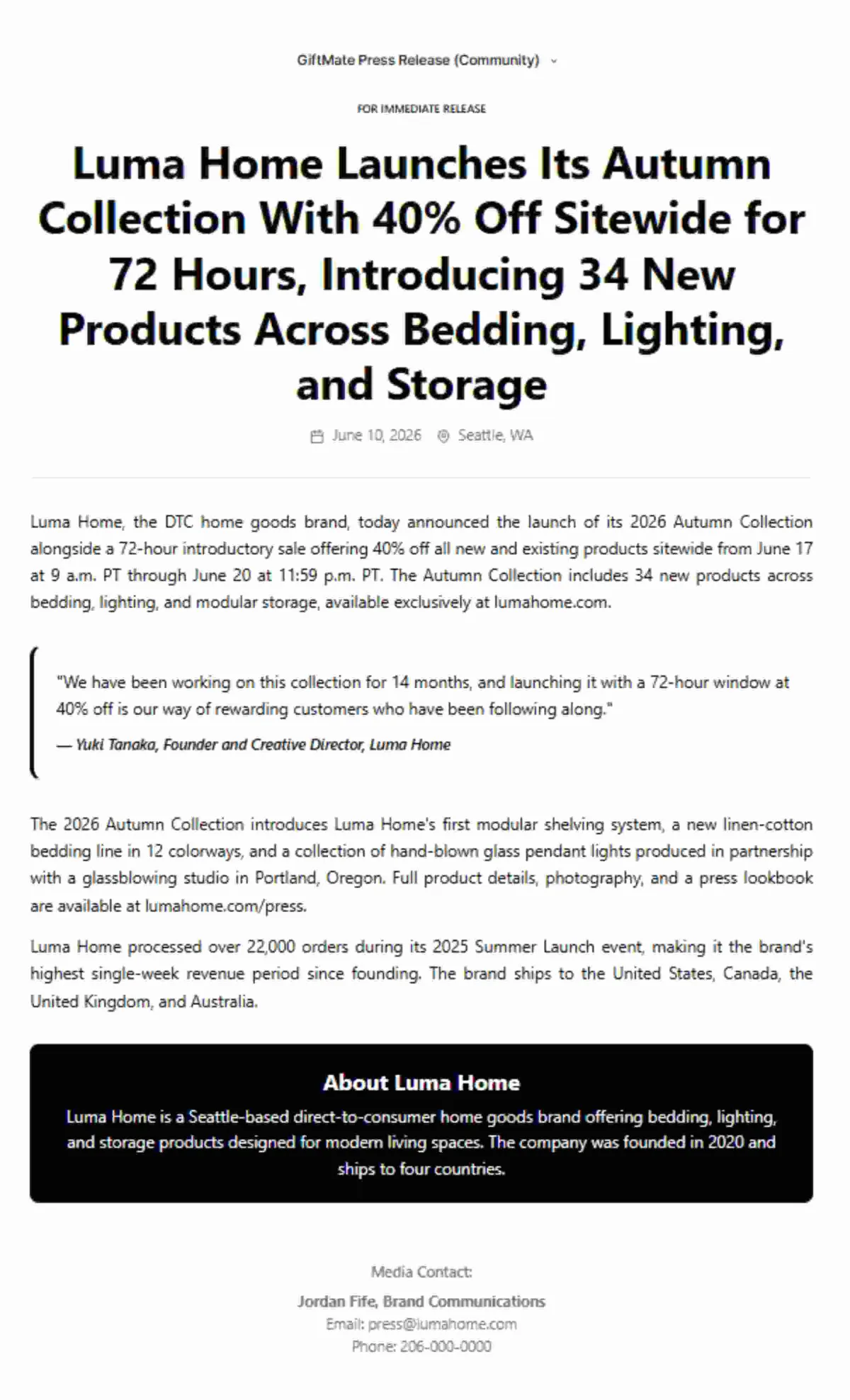
A retail or ecommerce press release announces a product launch, sale event, or collection drop with the specific details that give journalists and shoppers a reason to act immediately. This example covers a DTC home goods brand launching a new collection with a time-limited offer and shows how specificity about percentages, dates, and product categories outperforms vague promotional language every time. The buy link or landing page URL belongs in the body, not only in the boilerplate.
Why This Ecommerce Release Leads With Specifics
Ecommerce press releases compete for attention at the busiest moments in the retail calendar. The ones that cut through are specific: exact discount percentages, exact dates, specific product categories. "Up to 50% off the entire winter collection from November 28 through November 30" outperforms "significant savings on select items" in every measurable way, including journalist pickup and search indexing.
Effective ecommerce product launch press releases also include a media asset reference. Publications covering retail are visual. A release with no images or product photography has a demonstrably lower pickup rate than one that directs journalists to a media kit.
The Mistake Most Retail Releases Make
Sending an ecommerce release without the buy link or landing page URL in the body. The boilerplate is not enough. The link belongs in the second paragraph.
What to Steal
State the offer in the headline. "DTC Brand Launches Winter Collection at 50% Off for 72 Hours" tells the complete story in the headline. The body provides the supporting details.
Example #12: Crisis / Corrective Statement
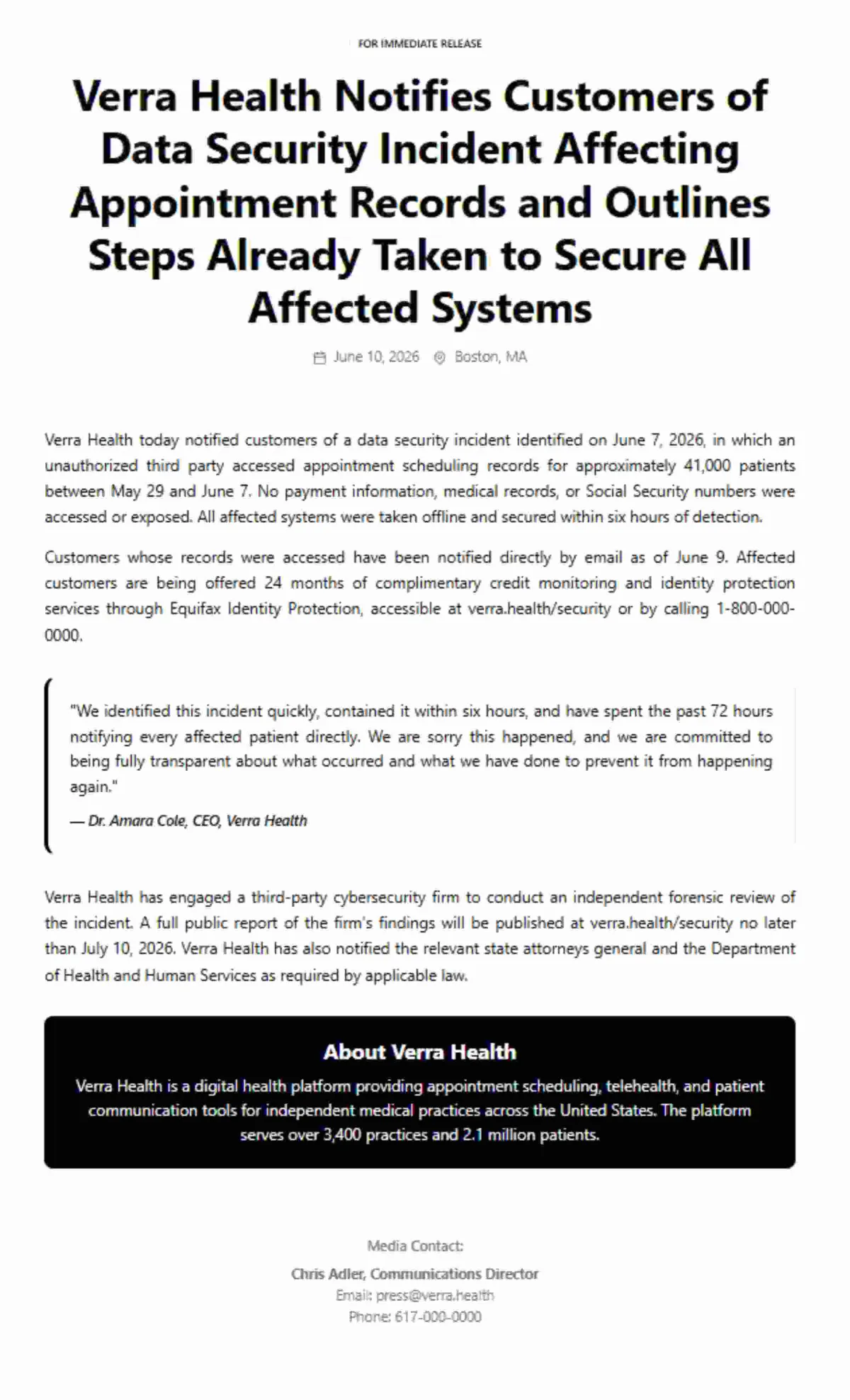
A crisis press release notifies affected parties of an incident, states what has already been done to address it, and tells readers what action they should take right now. This example covers a healthcare platform responding to a data security incident and demonstrates the sequencing that builds trust: resolution first, explanation second, apology third. Every word in a crisis release will be quoted, so factual precision and direct language are not optional.
What Works
A crisis press release has one job: tell affected parties what to do and what the company is already doing about it. The structure that works is consistent: acknowledge the issue clearly in the first sentence, state the action already taken in the second, tell customers what they should do now in the third, and provide a direct contact channel before the boilerplate.
A well-documented real-world reference is Target's crisis communications response following a major data breach. The communications team led with the customer action required, not with the explanation of how the breach occurred. That sequencing, resolution before explanation, is what separates a crisis release that builds trust from one that deepens damage.
Why This Crisis Release Leads With Resolution
Passive voice and vague acknowledgment make a crisis worse. "It has come to our attention that there may have been an incident affecting some customers" fails to communicate effectively with the people who need accurate information most. Name the issue, state the facts including contact details for affected parties, and lead with what has already been done. PR Newswire and Business Wire both flag passive crisis releases as lower-authority content when indexing.
The Mistake Most Crisis Releases Make
Write the first paragraph of a crisis release as if a journalist will quote it directly in their story, because they will. Every word is under scrutiny. Keep it factual, direct, and resolution-first. Embargoed press releases during a crisis should be avoided entirely: embargo implies delay, and delay in a crisis context signals concealment to relevant journalists and the public.
For a complete breakdown of what every section of a press release should accomplish, see our guide to the essential elements of a press release and our dedicated page on writing the boilerplate.


