
In a world full of ads, people trust what others say more than what brands claim. That’s where earned media becomes a game-changer.
Unlike paid ads, earned media can’t be bought. It’s the publicity, mentions, and recommendations your brand earns naturally from customers, journalists, and communities.
In this guide, we’ll break down what earned media is, why it matters for your brand, real-world examples, and actionable strategies to earn it, so your brand grows credibility, trust, and visibility without spending on ads.
Key Highlights:
- Earned media is unpaid, third-party exposure that builds trust through independent validation rather than advertising
- News coverage, reviews, social mentions, backlinks, and word-of-mouth all contribute to earned media visibility
- Earned media carries higher credibility than paid or owned channels because brands do not control the message
- Strong earned media improves brand awareness, buying confidence, and long-term SEO authority
- Press releases and PR efforts act as catalysts for earned media when stories are genuinely newsworthy and relevant
What Is Earned Media?
Earned media refers to publicity and exposure a brand receives organically from third parties, without paying for placement.
It happens when people, platforms, or publications talk about your brand because they choose to, not because they are paid to.
Earned media is considered the most credible form of media because the message comes from an independent source rather than the brand itself.
Earned media is unpaid brand exposure gained through organic mentions, coverage, reviews, or sharing by others.
In simple terms: You do not pay for it, you do not own the channel, and you earn it through reputation, value, or relevance. This distinction is the core of the paid, owned, and earned media framework used by PR professionals to categorize brand visibility.
Key Characteristics of Earned Media
- Unpaid: No direct cost for placement
- Third-party driven: Comes from customers, journalists, creators, or communities
- High trust: Seen as more authentic than ads
- Low control: Brands cannot fully control messaging or timing
This is why earned media is often described as “validation from the outside world.”
How Earned Media Works in Marketing?
Earned media works by leveraging trust and social proof instead of paid promotion.
Here’s how the process typically happens:
- A brand creates value like a strong product, useful content, a compelling story and a notable announcement.
- A third party notices how a journalist covers the story, a customer leaves a review, a user shares it on social media and a website links to the brand organically.
- The message spreads organically: New audiences discover the brand, Trust transfers from the source to the brand and Visibility increases without ad spend.
Earned Media in the Marketing Ecosystem
Earned media sits alongside two other core media types:
- Paid Media: Ads, sponsored posts, paid placements
- Owned Media: Website, blog, email list, social profiles
Earned media acts as the trust amplifier for both:
- Paid ads perform better when a brand has strong earned media
- Owned content gains authority when others reference or share it
In modern marketing, earned media is often the result of strategic PR, content quality, and brand credibility.
Earned media is unpaid, third-party brand exposure that builds trust, credibility, and visibility through organic mentions rather than advertising.
Examples of Earned Media & Types of Earned Media
Earned media appears wherever people or platforms talk about a brand on their own, without being paid. These mentions can happen across PR, press release, digital marketing, social media, and search.
Below are the most common and relevant examples and types of earned media, explained clearly.
1. Media Coverage and News Mentions
When a journalist, blog, or publication writes about a brand without payment, it is earned media. Editorial coverage carries high authority and trust, especially when it comes from established publications.
Examples include:
- A news article covering a company launch
- A feature story about a startup’s growth
- A quote from a brand founder in an industry article
2. Customer Reviews and Testimonials
Reviews written voluntarily by customers are a core form of earned media.
People trust other customers more than brand messaging. Reviews strongly influence purchase decisions and brand perception.
Examples include:
- Google reviews
- Trustpilot or G2 ratings
- Product reviews on marketplaces
3. Social Media Mentions and Shares
When users talk about or share a brand marketing on social platforms without sponsorship, it counts as earned media. These mentions extend reach organically and act as public social proof.
Examples include:
- A customer tagging a brand in a post
- A tweet praising a product
- A LinkedIn post recommending a service
4. Word-of-Mouth Referrals
Personal recommendations both online and offline are earned media. Word-of-mouth is often the most trusted marketing channel, especially in high-consideration industries.
Examples include:
- Someone recommending a brand in a community group
- A professional referring a service to peers
- Discussions in forums or comment sections
5. Organic Backlinks and Citations
When other websites link to your content naturally, it is earned media. Organic backlinks signal authority and relevance to search engines and support long-term SEO growth.
Examples include:
- A blog referencing your research
- A resource list linking to your guide
- An industry site citing your data
6. Influencer Mentions (Unpaid)
If an influencer talks about a brand without being paid or sponsored, it is earned media. Unpaid mentions are seen as genuine opinions, not advertisements.
Examples include:
- A creator organically recommending a tool
- A YouTuber mentioning a product they use
- An expert citing a brand in their content
Earned media includes news coverage, customer reviews, social mentions, word-of-mouth referrals, organic backlinks, and unpaid influencer mentions which is all driven by third-party choice, not payment.
Why Earned Media Matters for Brands?
Earned media matters because it builds trust at scale, something brands cannot buy directly. In a digital environment crowded with ads, people rely more on independent voices than brand messaging.
This is why earned media plays a critical role in long-term brand growth.
1. Builds Trust and Credibility
Earned media is trusted because it comes from third parties, not the brand itself.
People trust recommendations from others far more than advertisements. Earned media reduces skepticism and builds credibility faster than paid channels.
2. Increases Brand Awareness and Reach
Earned media exposes your brand to new audiences you don’t already control.
Earned media expands reach organically, often outperforming paid campaigns in awareness and recall.
3. Supports Buying Decisions and Conversions
Earned media influences people at the decision stage.
High-trust signals lead to higher consideration, confidence, and conversion rates.
4. Cost-Effective Brand Growth
While earning media requires effort, the exposure itself is not paid for.
There is no direct cost for Editorial mentions, Reviews, Social recommendations and Organic backlinks.
Earned media delivers long-term value without ongoing ad spend, making it one of the most cost-efficient marketing assets.
5. Strengthens SEO and Digital Authority
Earned media contributes directly to search visibility: Organic backlinks improve domain authority, Brand mentions increase entity recognition and Reviews support local and brand search trust.
Search engines and AI systems favor brands that are talked about naturally across the web.
6. Enhances the Impact of Paid and Owned Media
Earned media acts as the trust layer across the entire marketing ecosystem. Paid ads perform better when a brand is trusted, Owned content gains authority when cited by others and PR mentions reinforce brand storytelling.
Earned media matters because it builds trust, increases visibility, influences buying decisions, strengthens SEO, and amplifies paid and owned marketing.
Earned Media vs Paid Media vs Owned Media
Earned, paid, and owned media are the three core media types in marketing. Each plays a different role, and none works best alone. The key difference lies in who controls the message, who pays for distribution, and how much trust the audience places in it.
Understanding this distinction helps brands build balanced, effective marketing strategies.
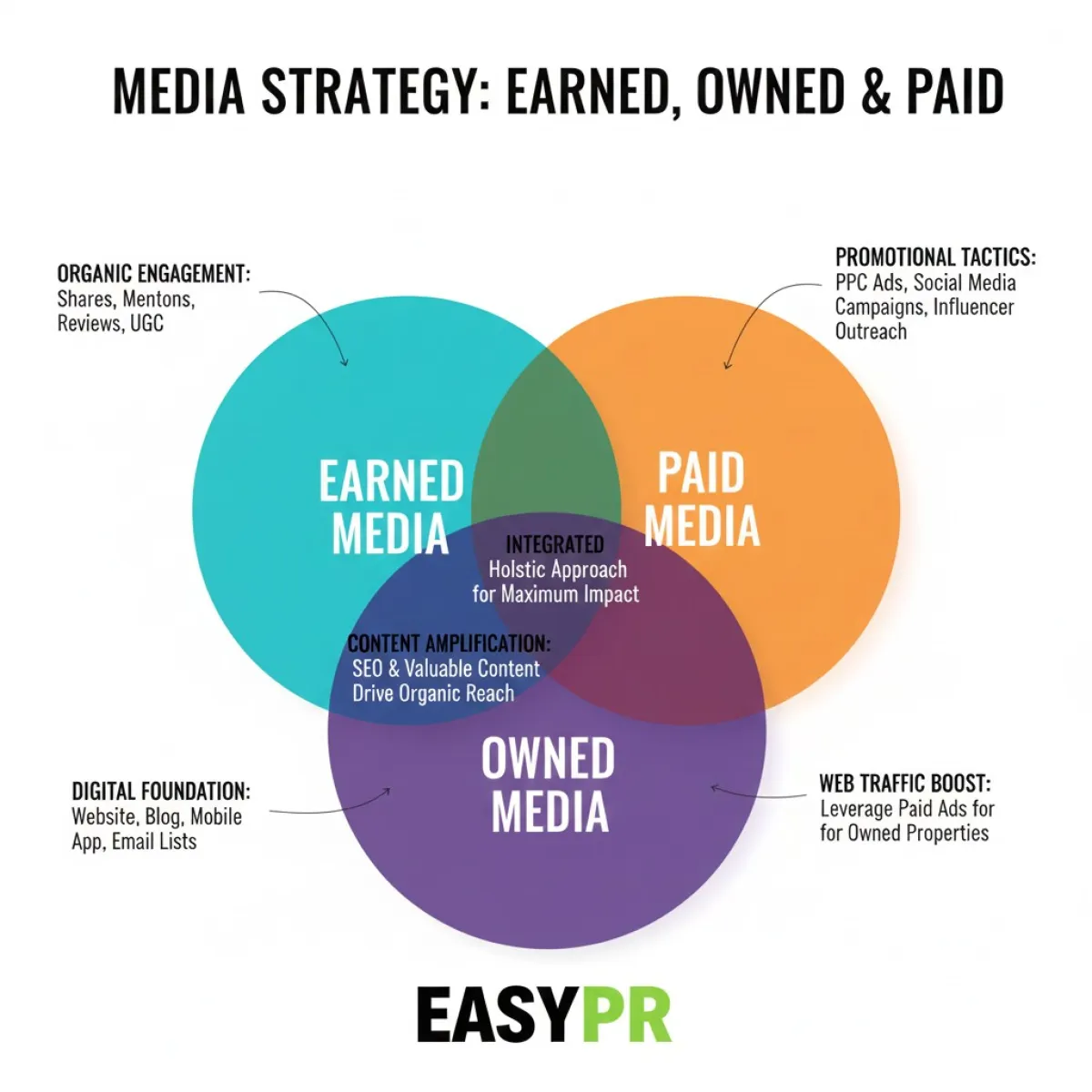
1. Earned Media
Earned media is exposure a brand receives organically from third parties, without payment.
Key traits:
- No direct cost for placement
- Comes from journalists, customers, creators, or communities
- High credibility
- Low control over message and timing
Common examples:
- News coverage
- Customer reviews
- Social media mentions
- Word-of-mouth referrals
- Organic backlinks
Primary strength: Trust and authenticity
2. Paid Media
Paid media refers to visibility a brand pays for directly.
Key traits:
- Immediate reach
- Full control over messaging
- Requires ongoing budget
- Clearly marked as advertising
Common examples:
- Google and social ads
- Sponsored posts
- Display advertising
- Influencer partnerships (paid)
Primary strength: Speed and scale
3. Owned Media
Owned media consists of channels a brand fully controls.
Key traits:
- No distribution cost
- Full editorial control
- Requires time and effort to grow
- Limited to existing audience reach
Common examples:
- Website and blog
- Email newsletters
- Brand social profiles
- Press releases and brand announcements
- Mobile apps
Primary strength: Long-term brand assets
When Each Media Type Works Best?
- Earned media works best for building trust and authority
- Paid media works best for fast traffic and promotions
- Owned media works best for nurturing relationships and retention
The most effective brands combine all three, using earned media to validate paid campaigns and strengthen owned channels.
How Earned Media, Paid and Owned Media Work Together?
This integrated approach combines paid, earned, and owned media into a single, coordinated marketing strategy.
- Paid media drives initial attention
- Owned media educates and converts
- Earned media confirms credibility
How Brands Earn Media Coverage?
Earned media does not happen by accident. While brands cannot buy it, they can create the conditions that make earned coverage likely.
At its core, earning media is about relevance, credibility, and value.
1. Create Something Worth Talking About
The first requirement for earned media is newsworthiness.
Journalists, creators, and audiences talk about what is new, useful, or meaningful, not promotional messages.
2. Build a Strong Brand Reputation
Earned media is easier for brands that are already trusted.
People are more willing to mention, recommend, or cover brands they believe in.
3. Invest in Public Relations (PR)
Understanding PR press release importance is central to this, PR is the structured way brands earn visibility, not buy it. Media coverage happens when a brand adds value to the story, not when it pushes sales messages.
4. Encourage Customer Advocacy
Happy customers naturally create earned media.
Customer-driven earned media is seen as highly authentic and influences buying decisions strongly.
5. Create Shareable, Useful Content
Content earns media when it is helpful, original, easy to reference or link to and relevant to a specific audience.
People share and cite content that helps them look informed or solve problems.
6. Be Present Where Conversations Happen
Earned media often starts in online communities, industry forums, social platforms and professional networks.
Brands that listen, engage, and contribute meaningfully are more likely to be mentioned.
Visibility grows when brands participate without trying to dominate the conversation.
How Press Releases Support Earned Media?
Press releases play a strategic role in earned media, but they are not earned media by default. A press release is owned media because it is created and distributed by the brand. Earned media happens only when third parties such as journalists, publications, or industry platforms choose to cover the story independently.
When a press release presents genuinely newsworthy information such as a product launch, company milestone, data insight, or industry announcement, it gives journalists a credible starting point. To maximize that opportunity, get published on Business Insider, and more so your story is already visible on outlets journalists trust and reference.
In this way, press release distribution act as a catalyst for earned media by enabling discovery, providing accurate context, and supporting journalistic storytelling without controlling the final message. The credibility comes from the independent decision to publish, not from the press release itself.
Conclusion
Earned media is a trust amplifier that boosts your brand’s credibility, reach, and authority. By creating value, building relationships, and letting your work speak for itself, your brand can earn attention that lasts.
Combine earned media with your paid and owned channels, and you get a marketing ecosystem that not only reaches more people but also makes them believe in your brand. Start focusing on what your audience values, and watch your brand’s reputation grow organically.
Frequently Asked Questions
Is earned media the same as organic media?
Earned media and organic media are closely related but not exactly the same.
Organic media refers to unpaid visibility on platforms you already own or participate in, such as organic social posts or blog traffic.
Earned media is specifically third-party validation, meaning exposure created by others choosing to talk about your brand, such as media coverage, reviews, backlinks, or social mentions. All earned media is organic, but not all organic media is earned.
Can earned media be measured?
Yes, earned media can be measured, though not in the same way as paid advertising.
Common earned media metrics include brand mentions, media coverage volume, backlinks earned, referral traffic, share of voice, sentiment analysis, review ratings, and social engagement. The focus is on impact, trust, and long-term value rather than immediate clicks alone.
What is earned media value?
Earned media value (EMV) is an estimated metric that assigns a monetary value to earned media exposure.
It compares unpaid mentions to what similar visibility would have cost through paid advertising.
While EMV helps quantify impact, it should be used as a directional indicator rather than a precise financial figure, as earned media delivers trust and credibility beyond direct ad equivalency.
Is influencer marketing earned media?
Influencer marketing can be earned media or paid media depending on the relationship.
If an influencer mentions a brand organically without payment or sponsorship, it qualifies as earned media.
If the brand pays for the mention or provides incentives, it is considered paid media, even if it appears authentic.
How long does earned media last?
Earned media often delivers long-term value.
Media articles, backlinks, reviews, and citations can continue driving traffic, trust, and SEO benefits months or even years after publication.
Unlike paid ads, earned media does not stop working when a budget runs out.
Is earned media better than paid media?
Earned media is not better or worse than paid media; it serves a different purpose.
Earned media excels at building trust, credibility, and authority, while paid media provides speed, control, and scale.
The strongest marketing strategies use earned media to validate paid campaigns and strengthen owned channels.
Can startups and small brands earn media?
Yes, startups and small brands can earn media effectively.
In fact, journalists and audiences often look for new, innovative stories.
Startups earn media by focusing on unique value, strong storytelling, data, thought leadership, customer advocacy, and targeted PR rather than promotional messaging.


